
True Red Tail Boa: Everything You Need to Know
The True Red Tail Boa is scientifically named Boa constrictor constrictor. It belongs to the Boidae family, which includes non-venomous constrictor snakes.
Scientific Name: Boa constrictor constrictor
Snake Family: Boidae
True Red Tail Boa: An Overview
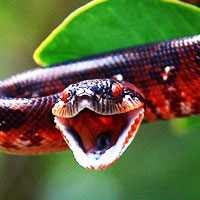
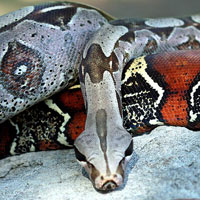
The True Red Tail Boa (Boa constrictor constrictor) is a large, non-venomous snake renowned for its vibrant red tail markings. Native to South America, this boa is a subspecies of the Boa constrictor and is prized among snake enthusiasts for its striking appearance and manageable temperament. With proper care, the True Red Tail Boa can thrive in captivity for decades, making it a rewarding choice for experienced keepers.
Where Does the True Red Tail Boa Live?
The True Red Tail Boa is native to the tropical regions of South America, including the Amazon Basin. Its natural habitat provides warm temperatures, high humidity, and plenty of cover, all of which are vital for its survival.
| Habitat Feature | Description |
|---|---|
| Geographic Range | Amazon Basin: Brazil, Peru, Colombia, Guyana, and Venezuela |
| Preferred Environment | Tropical rainforests, savannas, and riverbanks |
| Climate | Warm and humid, with temperatures ranging from 75-85°F |
Diet and Feeding Habits of the True Red Tail Boa
The True Red Tail Boa is a carnivorous constrictor that feeds on mammals, birds, and reptiles in the wild. In captivity, providing a proper diet is essential for their health and well-being.
- Juveniles: Feed on pinky mice or small rodents every 5-7 days.
- Adults: Feed on larger prey, such as rats or small rabbits, every 10-14 days.
- Prey Size: Ensure prey is no larger than the snake’s widest part.
- Hydration: Provide fresh, clean water for drinking and soaking.
Behavior and Temperament of the True Red Tail Boa
The True Red Tail Boa is known for its calm demeanor, making it a favorite among experienced snake keepers. However, like any large snake, it requires respect and proper handling techniques.
- Docile Nature: Generally tolerant of handling but may be defensive when young.
- Hunting Behavior: Ambush predator that relies on constriction to subdue prey.
- Activity Level: Crepuscular, most active during dawn and dusk.
Ensuring the Health and Longevity of the True Red Tail Boa
With proper care, True Red Tail Boas can live 20-30 years in captivity. Maintaining optimal conditions and monitoring their health are crucial for their longevity.
| Health Issue | Symptoms | Prevention |
|---|---|---|
| Respiratory Infections | Wheezing, open-mouth breathing | Maintain proper humidity and temperature |
| Parasites | Visible mites, scratching behavior | Regular cleaning and enclosure maintenance |
| Skin Shedding Issues | Stuck or incomplete sheds | Provide adequate humidity levels |
Reproductive Behavior of the True Red Tail Boa
The True Red Tail Boa is ovoviviparous, giving birth to live young. Breeding these boas in captivity requires careful attention to environmental conditions and the health of the breeding pair.
- Mating Season: Late winter to early spring.
- Gestation Period: Approximately 5-7 months.
- Litter Size: Typically 10-30 live young.
- Breeding Tips: Simulate seasonal changes by adjusting light cycles and temperature to encourage breeding behavior.
Handling and Caring for the True Red Tail Boa
Caring for a True Red Tail Boa requires a well-maintained enclosure, regular handling, and a commitment to meeting its environmental and dietary needs. These snakes are ideal for experienced keepers due to their size and strength.
- Maintain an enclosure temperature gradient of 75-85°F with a basking spot.
- Provide high humidity levels (50-70%) to ensure proper shedding and hydration.
- Include sturdy branches and hiding spots for enrichment.
- Handle gently and support the snake’s body to reduce stress.
- Clean the enclosure regularly and monitor for signs of health issues.
Other Snakes In This Species
 Argentine Boa
 Calabar Burrowing Boa
 Colombian Rainbow Boa
 Common Boa
 Cooks Tree Boa
 Cuban Boa
 Desert Rosy Boa
 Desert Sand Boa
 Dumeril Boa
 Egyptian Sand Boa
 Emerald Tree Boa
 Haitian Boa
 Hog Island Boa
 Madagascar Ground Boa
 Madagascar Tree Boa
 Pacific Boa
 Red Sand Boa
 Rough-scaled Sand Boa
 Rubber Boa
 True Red Tail Boa
 Western Rainbow Boa