Pygmy Python
Scientific Name: Antaresia Perthensis
Share this Post
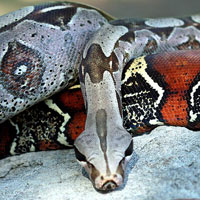
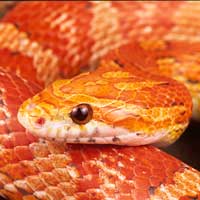
Antaresia perthensis is a scientific name for this snake species whose origin is Western Australia. Its common name is the Pygmy Python and it is the smallest affiliate of the Pythonidae family. The species is also known as the Western Children’s Python or Anthill Python due to its occurrence on termite mounds. It has no subspecies and is the smallest python in the world. A mature Pygmy Python is as long as 18 to 20 inches translating to 48 to 56 centimeters. Dorsally, the color of the snake is brick red without or with a pattern. The pattern made of dark spots arranged in four regular series is most pronounced in the young species. Ventrally, it is creamish white and the head is triangular shaped and conspicuously short.
Pygmy Pythons Are Beautiful Creatures
Facts About Pygmy Pythons
Geographic Location
It is commonly found in the northwestern part of Australia and on a few coastal islands. The species is also known to occur in the Pilbara region of northwest Western Australia and adjacent areas. Additionally, the snake occurs in Marble Bar, Port Hedland, Karratha, Hamersley Ranges and Goldsworthy in Australia
Habitat
It commonly inhabits arid, hot regions and in spinifex grass bushes. It is also encountered in rocky hill areas and in shrubs with vegetation. In some regions, the snake shelters in termite mounds.
Behavior
Mostly seen crossing roads at night in warm weather and primarily consumes lizards and small mammals.
Reproduction
The Pygmy Python normally becomes sexually mature about the third year. The females are bigger than the males and the eggs of this snake species measure approximately 1.5 inches or 38 mm long. The egg clutch sizes vary up to 10 eggs and hatchlings are almost 18 to 20 cm long.
Captivity
In captivity, it is recognized to be a hardy kind of snake, which does well for the keeper and it is easy to keep. The pattern of the snake tends to fade when in captivity.