Macklot’s Python
Scientific Name: Liasis Mackloti
Share this Post
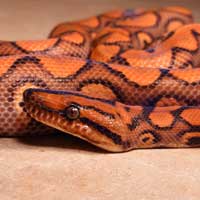
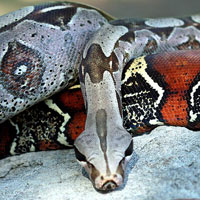
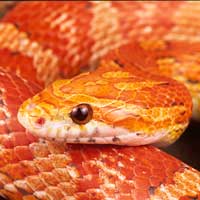
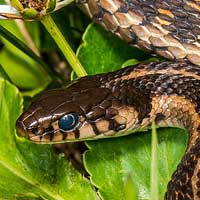
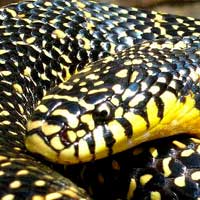
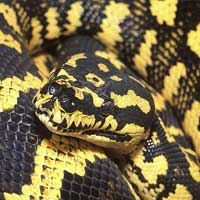
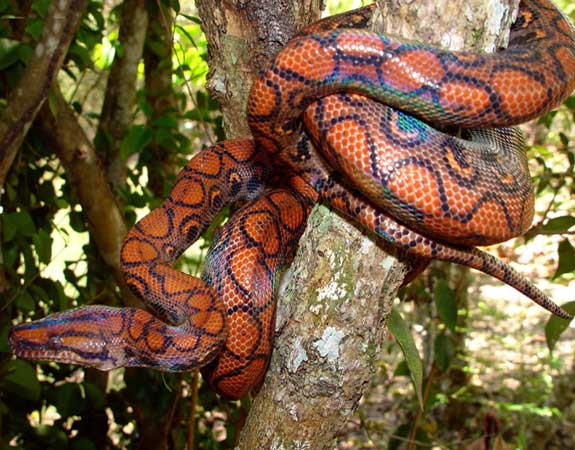
This is a non-venomous snake where adults grow to a length of seven meters. The snake has a dull skin that has a dark brown color. In some cases, one may find a yellow shade on the skin. It has labial scales that are brightly colored. The dark brown color enables the snake camouflage itself when in its natural habitat. This saves them from predators. Snakes belonging to this species have vestigial pelvis and limbs. These non-functional limbs occur as spurs locates on either side of cloaca. Males have larger spurs and use them to arouse females during mating. Macklots Python has teeth on its premaxilla bone.
Macklot’s Pythons Are Beautiful Creatures
Facts About Macklot’s Pythons
Geographic Location
Macklots python occur in Southeast Asia, India in addition to Australia. The snake species also exists in some parts of Africa.
Habitat
This snake species live in regions that lie within tropical rain forests. These include underneath bushes. Some occur along rivers and streams since they are good swimmers. Tropical rain forests have trees inhabited by the Macklots Python because they are also good climbers assisted by their belly muscles.
Behavior
Macklots Python has the ability of constricting its muscles. This allows it kill its prey by squeezing it to death. By squeezing their prey, they deprive them of oxygen and sufficient blood circulation therefore causing death. Macklots pythons swallow their prey whole and remain dormant awaiting digestion. Time consumed during digestion period depends on the size of prey.
Reproduction
Macklots pythons lay eggs since they are oviparous. Subsequent to laying eggs, the female protects the eggs by coiling around them to provide heat. Contraction of muscles produces incubation heat that allows eggs to hatch.
Captivity
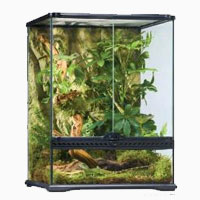
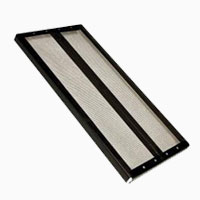
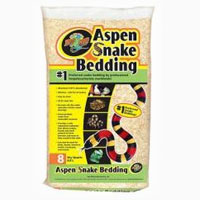
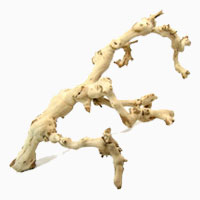
Macklots Python has a fine skin thus; poachers favor it. Many conversation centers safeguard this snakes existence. Due to lack of venom, many people like this snake species as a pet. Scientists also use it for research work.