Scarlet Kingsnake
Scientific Name: Lampropeltis Triangulum Elapsoides
Share this Post
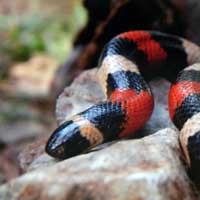
The Scarlet Kingsnake, Lampropeltis triangulum elapsoides, are significantly smaller in comparison to the milk snakes. They grow to a length of between 14 and twenty inches. The pattern and coloration this snake proudly presents is the most magnificent in the area range from Georgia and South Carolina. It has interplay of yellow, black and red bands red meets black but not yellow. This distinguishes it from Micrurus fulvius, the eastern coral snake, where the red meets yellow but not black. The Scarlet Kingsnake has a red snout, smooth scales and nineteen rows of dorsal scales. It is non-venomous and rarely bits.
Scarlet Kingsnakes Are Beautiful Creatures
Facts About Scarlet Kingsnakes
Geographic Location
This snake is a commonplace feature throughout Florida. Other locations that host the Scarlet Kingsnake are the areas from the South of New Jersey to eastern Louisiana.
Habitat
With reset to this aspect, this snake likes hardwood prairies, cultivated fields, hammocks, and pinelands.
Behavior
The Scarlet Kingsnake derives protection from predators via mimetic coloration so that it appears similar to venomous coral snakes of the Micrurus genus. They spend long periods under cover, preferring loose bark covering rotting pines. The probable reason for this is the abundant supply of skinks, their favorite food.
Reproduction
The incubation temperature is the greatest determinant of the sex of the offspring. Cooler temperatures favor female offspring while warmer conditions favor males. In captivity, breeding this type of snake is easy. For successful breeding, they require a brumation period of between two and three months during the winter, under temperatures of 55 to 65?F. A typical clutch has two to six eggs with an incubation period of fifty two to fifty seven days. May and June are the most viable breeding months. They have a lifespan of between ten to fifteen years.
Captivity
In captivity, a diet of pinkie mice, small snakes and lizards is sufficient. They are a favorite attraction in many zoos and parks due to their attractive coloration.