Durango Mountain Kingsnake
Scientific Name: Lampropeltis Mexicana Greeri

Share this Post
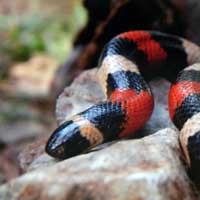
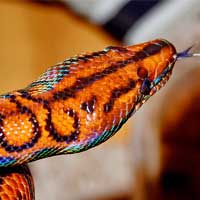
Durango Mountain Kingsnake is the popular name for this snake. Scientifically, it is known as Lampropeltis mexicana greeri and another common name for this species is Greers Kingsnake. The snake is very popular among beginners and experienced hobbyists and is well known for being moderately non-aggressive and hardy. The king in the species name refers to their great taste for other snakes and their capability to overpower other types of snakes. It is a small medium-sized kingsnake and normally grows to about 2 or 3 feet long. It is usually gray and comprises 25 to 28 black bands on the body with 4 to 7 extra bands on the tail. With orange and red markings appearing on the centers of the black bands and yellow markings at the rim of the black bands, the snake is beautiful in appearance. It has distinct and sharp patterns on the head and somehow looks like the Gray Banded Kingsnake with dorsal scales.
Durango Mountain Kingsnakes Are Beautiful Creatures
Facts About Durango Mountain Kingsnakes
Geographic Location
Primarily, this snake species is found in the Durango Mountains in Mexico. The origin of the snake is North America. It also occurs in Rancho Santa Barbara, which is 29 miles west of Ciudad Durango in Durango, Mexico.
Habitat
This is a high altitude snake and is therefore commonly found or rugged rocky terrains high up the hills. The vegetation in these areas comprises of scrub oak, fir, pine and cactus. Snow normally covers most of the snake’s habitat and this accounts for its short period of activity.
Behavior
The Durango Mountain Kingsnake is generally curious, gentle, docile and enjoys being handled. The general behavior and compatibility of this snake to other snakes is average.
Reproduction
The hatchling female greeri produces 2 clutches of approximately 9 eggs. After incubation, the eggs hatch producing young Durango Mountain Kingsnakes.
Captivity
It is easy to take care of this snake when in captivity; this is one of the reasons why it is commonly kept as a pet. The captive diet for the snake normally consists of rodents.