
Everything You Should Know About the Egyptian Sand Boa
The Egyptian Sand Boa is scientifically named Eryx colubrinus. It belongs to the Boidae family, which includes non-venomous constrictor snakes.
Scientific Name: Eryx colubrinus
Snake Family: Boidae
Egyptian Sand Boa: An Overview
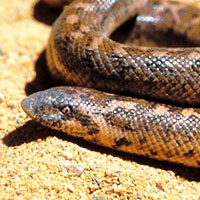
The Egyptian Sand Boa (Eryx colubrinus) is a fascinating and adaptable snake species native to Northern Africa. Known for its small size, burrowing behavior, and unique coloration, this non-venomous boa has become a popular pet for reptile enthusiasts. Its manageable size and ease of care make it an excellent choice for both beginners and experienced keepers. In this guide, we’ll explore its habitat, diet, behavior, health, reproduction, and care needs.
Exploring the Natural Habitat of the Egyptian Sand Boa
The Egyptian Sand Boa is native to arid and semi-arid regions of Northern Africa, including Egypt, Sudan, and surrounding areas. These snakes are highly adapted to living in sandy and rocky terrains, where they spend much of their time burrowing.
| Habitat Feature | Description |
|---|---|
| Geography | North Africa: Egypt, Sudan, Libya |
| Preferred Terrain | Sandy deserts and scrublands |
| Climate | Hot days, cool nights, low humidity |
What Does the Egyptian Sand Boa Eat?
The Egyptian Sand Boa is a carnivore, feeding primarily on small mammals, birds, and reptiles in the wild. In captivity, its diet is straightforward and easy to manage.
- Juvenile Sand Boas: Feed on pinky mice every 5-7 days.
- Adult Sand Boas: Feed on appropriately sized rodents every 10-14 days.
- Feeding Tips: Always provide prey that is no larger than the snake’s girth.
- Hydration: Fresh water should always be available for drinking.
Behavior and Temperament of the Egyptian Sand Boa
The Egyptian Sand Boa is known for its docile and calm demeanor, making it a favorite among snake keepers. Its burrowing nature adds to its charm, as it spends much of its time hidden under the substrate.
- Burrowing Behavior: Prefers staying under sand or loose soil.
- Calm Temperament: Rarely aggressive and tolerates handling well.
- Activity Level: Primarily nocturnal, but may be seen basking in captivity.
Health and Lifespan of the Egyptian Sand Boa
With proper care, the Egyptian Sand Boa can live for 15-20 years in captivity. Monitoring their health and maintaining a clean, well-regulated environment are crucial for their longevity.
| Health Issue | Symptoms | Prevention |
|---|---|---|
| Respiratory Infection | Open-mouth breathing, wheezing | Maintain proper humidity and temperature |
| Mites | Itching, visible mites | Regularly clean the enclosure |
| Obesity | Excessive weight gain | Avoid overfeeding |
Reproduction in Egyptian Sand Boas
The Egyptian Sand Boa is ovoviviparous, meaning it gives birth to live young. This reproductive method is intriguing and a rewarding experience for breeders.
- Mating Season: Late winter to early spring.
- Gestation Period: 4-6 months.
- Litter Size: 6-12 live young on average.
- Provide adequate hiding spots and a controlled environment to encourage successful breeding.
Handling and Care Tips for the Egyptian Sand Boa
Handling and caring for an Egyptian Sand Boa is relatively simple, thanks to its calm temperament and modest size. Following best practices ensures the snake remains healthy and stress-free.
- Handle gently and support its body to reduce stress.
- Maintain an enclosure temperature gradient of 85-90°F on the warm side and 70-75°F on the cool side.
- Use a substrate like sand or coconut fiber to mimic its natural habitat.
- Clean the enclosure regularly and provide fresh water daily.
- Provide hiding spots and ensure a secure lid on the enclosure to prevent escapes.
Other Snakes In This Species
 Argentine Boa
 Calabar Burrowing Boa
 Colombian Rainbow Boa
 Common Boa
 Cooks Tree Boa
 Cuban Boa
 Desert Rosy Boa
 Desert Sand Boa
 Dumeril Boa
 Egyptian Sand Boa
 Emerald Tree Boa
 Haitian Boa
 Hog Island Boa
 Madagascar Ground Boa
 Madagascar Tree Boa
 Pacific Boa
 Red Sand Boa
 Rough-scaled Sand Boa
 Rubber Boa
 True Red Tail Boa
 Western Rainbow Boa